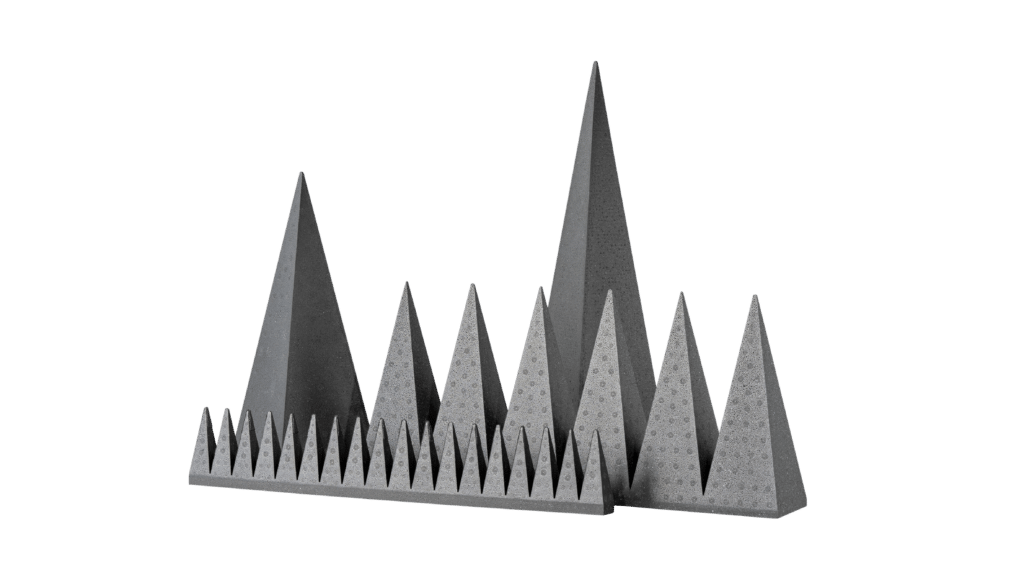
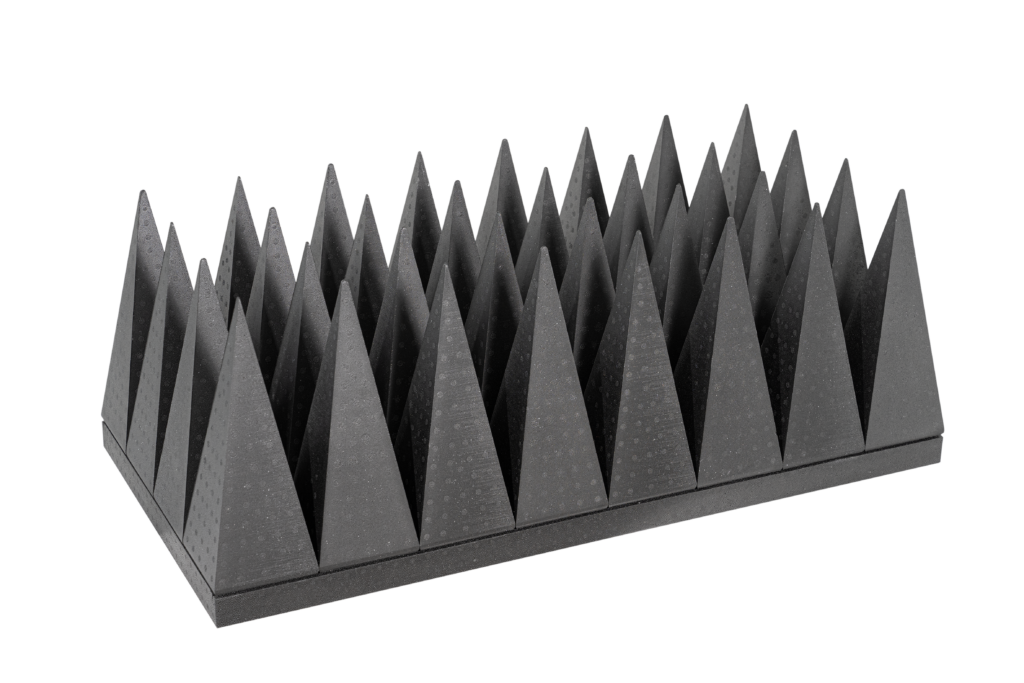
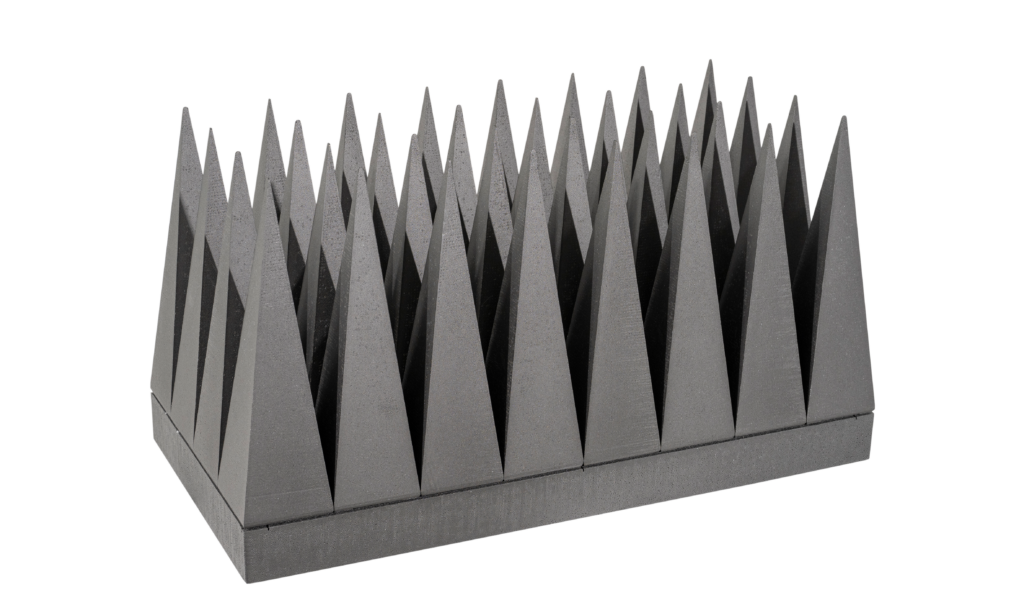
Sustainable, high performance and finished with the signature javelin tip.
Over The Air (OTA) Testing / Near Field testing / Compact Antenna Test Ranges
EM absorber overview
EVERYTHING YOU WANT TO KNOW ABOUT EM ABSORBERS
You will need an EM absorber sooner then you probably think. Whether it’s your phone, your car, your watch, your lawnmower or even your thermostat, there is a connected and ‘smart’ version of nearly everything you can think of. All of these devices emit some degree of electromagnetic radiation. The fact that this incredible array of devices (that are in use in cities, neighborhoods and streets around the world) can function simultaneously and without causing interference with vital infrastructure is thanks to international regulations governing these emissions. Necessarily, this means that if you’re in the business of designing new consumer electronics, commercial or military hardware, you need a facility to determine whether the emissions generated by your product fall within the guidelines set by the various emissions standards. This is where EM absorbers and (semi) anechoic chambers for EMC testing come in.
Microwave absorbers
Stable performance
200 MHz - 50 GHz range
REACH & RoHS compliant
No leakage of carbon particles
25 year warranty
Fire retardant effects
Environmentally friendly
THE EM ABSORBER: WHAT IS IT AND WHAT DOES IT DO?
An EM absorber can be made from polystyrene, polyethylene or polypropylene foams and is designed to absorb radiation (in the form of high frequency signals) into heat, thus preventing the radiation from bouncing around the chamber in which the equipment is being tested. There are different types of electromagnetic absorbers (hybrid or microwave absorbers being the most important ones), but the principle is largely the same: the EM absorbers are tuned to provide sufficient attenuation of the signal in a range where you plan on doing the most of your testing. This allows you to determine with great precision whether the technology you’re developing complies with international standards since there is neither outside interference nor excessive reflection of the signal on the interior of the chamber.
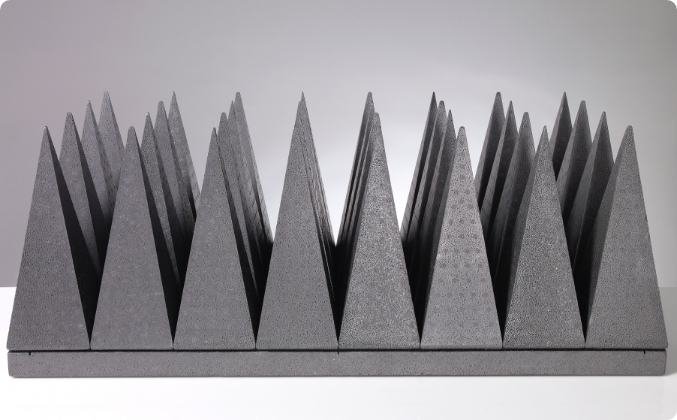
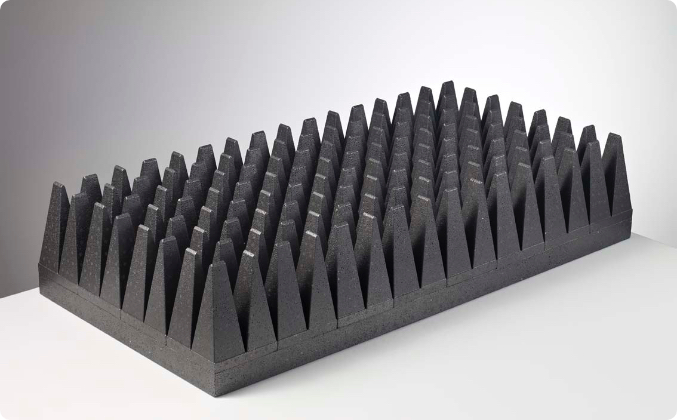
Absorbers capable of attenuating electromagnetic radiation come in a variety of shapes and sizes including pyramids, sheets, wedges, tiles and more intricate designs. The one most commonly used is the pyramidal EM absorber due to its reliable performance for popular frequencies. Performance in this case is quantified in decibels (dB). As we’ve pointed out, EM absorbers can be constructed using a variety of materials, each with its own advantages and disadvantages. Read the following entry to discover more about foam and polystyrene absorbers.
MT13-JT Absorber
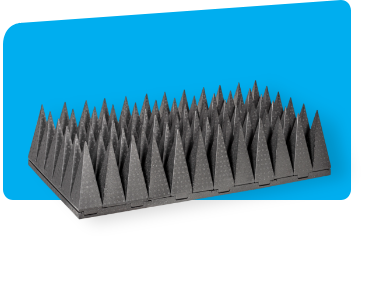
This 5-inch (13cm) absorber is specifically designed for smaller wireless antenna test setups, like OTA boxes or cabinets. The operating frequency is 2GHz up to 110GHz.
With a total height of 12-inch (30cm) this microwave absorber’ reflectivity performance is outstanding. Among other USP’s, DMAS absorbers are made of expanded polystyrene (EPS) and come with great benefits over traditional foams.
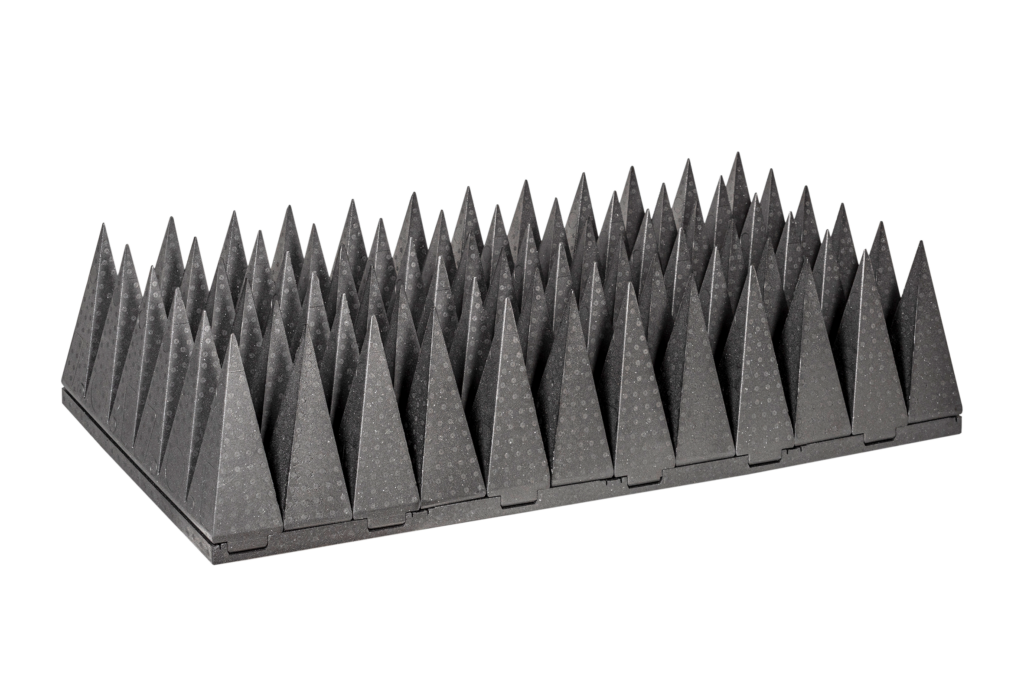
Introducing the MT45-JT (18”) absorber: a long-lasting, javelin-tipped, polystyrene absorber. Among other USP’s, DMAS absorbers are humidity resistant and made of closed-cell material. This provides great benefits over traditional foam materials, such as no leakage of carbon particles.
The tallest DMAS absorber is the MT65-JT. This 26-inch absorber is designed for measurements at very low frequencies. Its operating frequency starts at 200MHz. Among other USP’s, DMAS absorbers are lightweight and easy to install. (Adhesive-free installations)
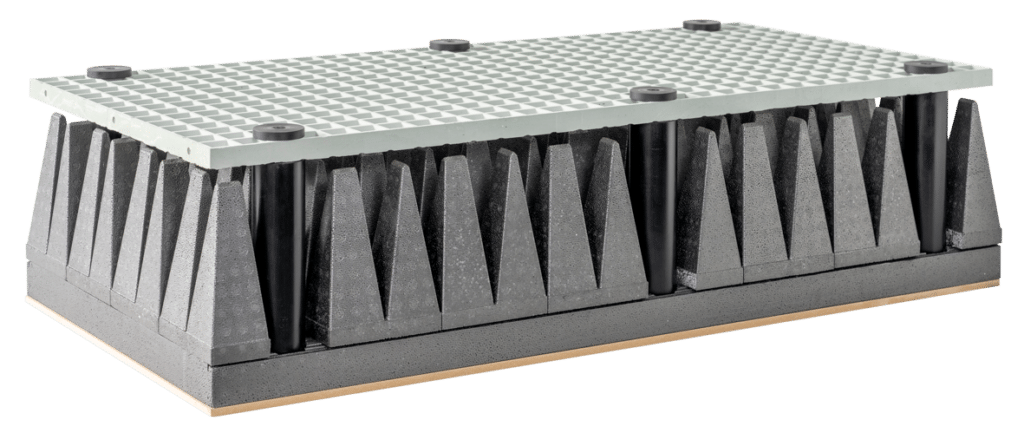
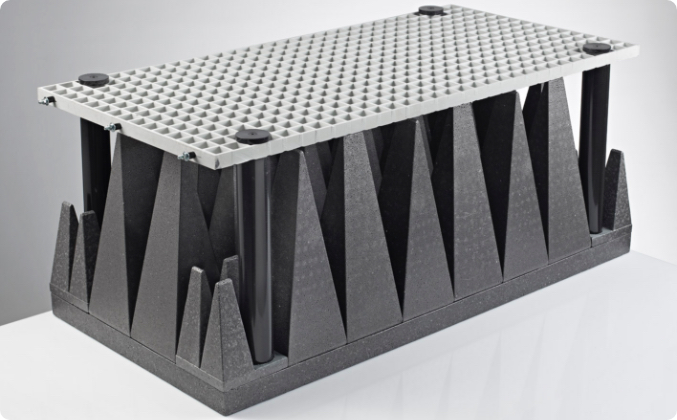
Need quick access to your antenna or Device Under Test (DUT)? Tired of getting first the floor absorbers out of the way before you can make adjustments in your setup? With DMAS walkway absorbers you have an immediate pathway available.
DMAS Absorber Baseplate
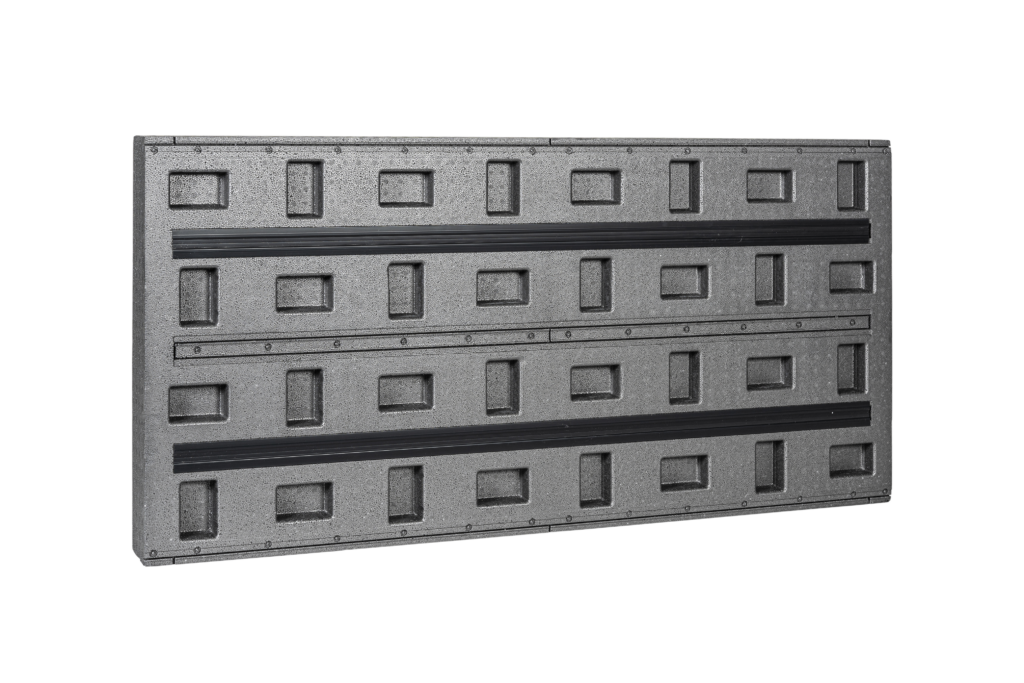
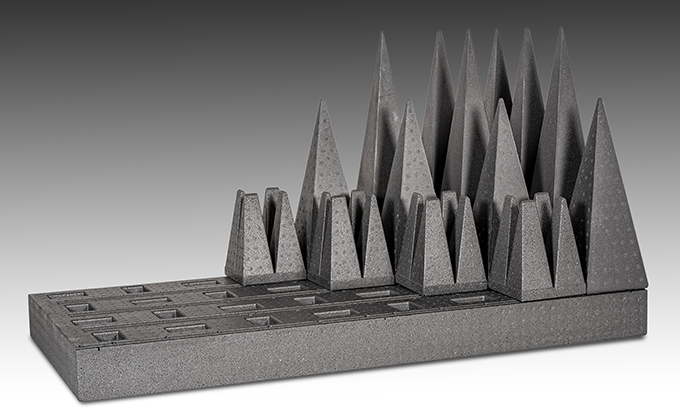
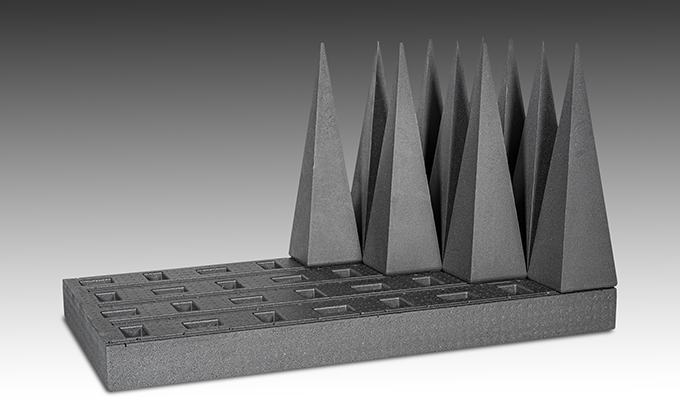
DMAS absorbers have a modular design, featuring baseplates and pyramids. The baseplate thickness varies by model, at 30mm, 50mm, or 100mm. The separate bases and pyramids allow for cost-effective shipping and easy replacement of broken tips.
Working with us
Why choose DMAS
Due to the (time) investment associated with the construction of a (semi) anechoic chamber and the demands placed on the research performed in these facilities, you don’t just work with anyone when selecting your components. So why should you choose to work with DMAS?
The support you need
In addition to a great product, we provide the advice you need to achieve the best results. Feel free to turn to us for expert technical advice. Questions are answered within 24 hours.
Made in The Netherlands
DMAS polystyrene absorbers are designed and manufactured in The Netherlands to ensure the highest levels of quality.
Affiliated with Comtest
DMAS enjoys a close collaboration with Comtest Engineering, one of the foremost suppliers of anechoic chamber solutions. Together, we have over 45 years of experience in the field.
Quality control
Tight quality control according to ISO 9001 and ISO 14001 standards applies to all production. Quality testing is conducted in our own lab in accordance with the IEEE std 1128-1998 standard.
Consisting of 3 unique models, this overview shows all available pyramid configurations for our microwave absorbers, featuring our latest Javelin Tip (JT) innovations.
MT45-JT Absorber
Javelin Tip (JT) absorbers are DMAS’ latest innovation. The sharp tip ensures outstanding performance at microwave frequencies matching traditional foam solutions.
MT65-JT Absorber
With its recognizable Javelin Tip, this is our largest microwave absorber with total height of 650mm (26″) and operating frequency starting at 200MHz.
Microwave Absorber MT25
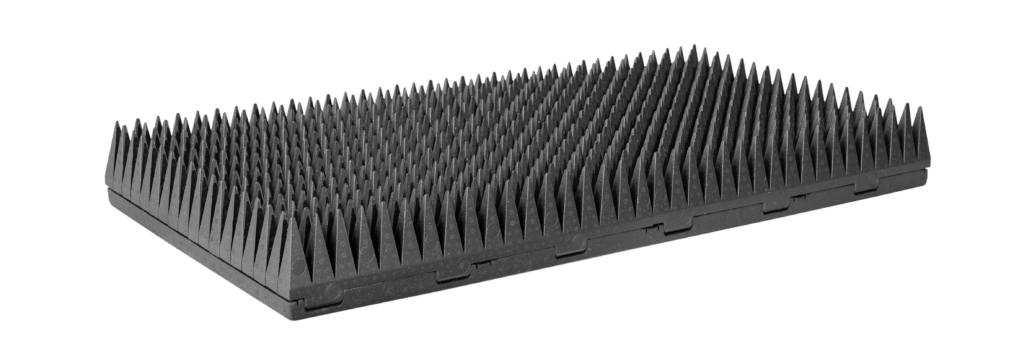
The MT25 model is our lowest absorber and is used in compact testing setups like wireless test chambers, also known as Over-The-Air (OTA) testing.
DMAS Walkway Absorber
Robust design to provide safe and easy test setup access in full anechoic chambers with floor absorber coverage.
Contact DMAS
ORDER THE PERFECT EM ABSORBER TODAY
DMAS EM absorbers represent the latest in performance & durability to make them a perfect fit for modern testing facilities. Contact us today to get started!